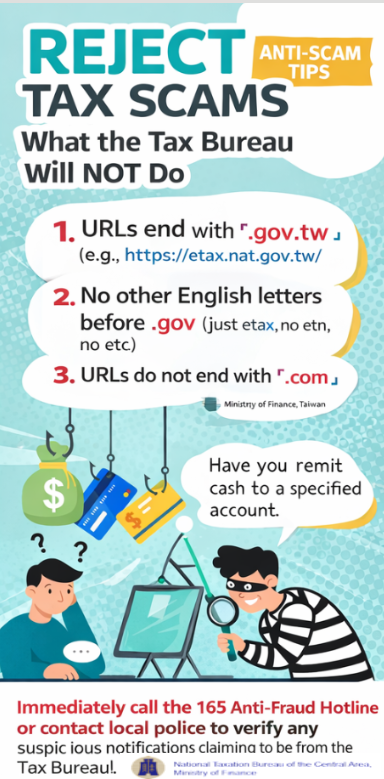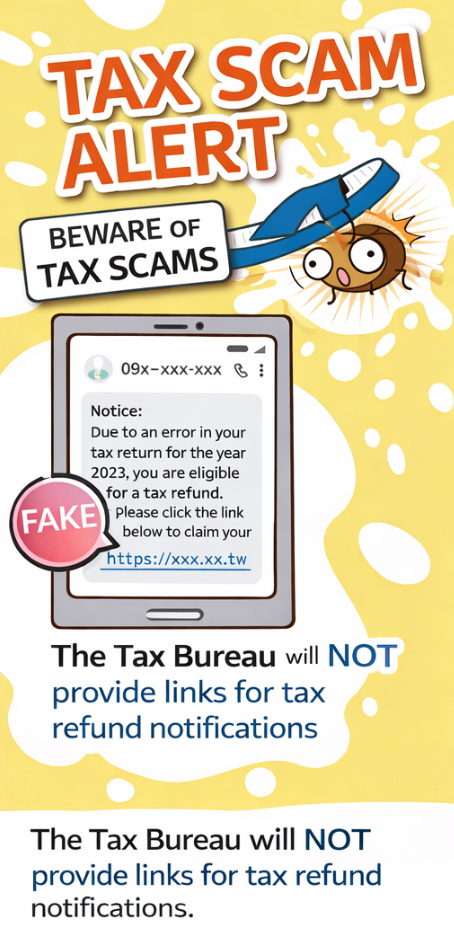

As the tax filing season approaches, the Taichung Branch of the National Taxation Bureau of the Central Area, Ministry of Finance, reminds the public that cases of scams under the pretense of “tax refund notifications” have been on the rise. Fraud rings often spread false information via text messages, emails, or social media, attempting to lure individuals into clicking suspicious links or providing personal information. The public is urged to remain vigilant.
The Branch stated that it has recently received reports from citizens who were sent emails or text messages claiming they were eligible for large “tax refunds” or “overdue refund payments,” despite never having applied for such refunds. These messages often request recipients to click on links or fill in personal information. Scam tactics are becoming increasingly sophisticated, even incorporating artificial intelligence (AI) to generate messages impersonating government agencies and deliberately creating a sense of urgency to deceive victims.
The branch further explained that the National Taxation Bureau will not proactively notify taxpayers of refunds via text messages, emails, or social media, nor will it request individuals to use online ATMs or provide sensitive information such as bank account numbers, credit card details, or passwords. The public should be especially cautious when receiving such messages and verify their authenticity.
Common tax refund scam tactics include:
1. Unsolicited refund-related messages or emails without prior application.
2. Creating a sense of urgency: using phrases such as “expired,” “act immediately,” or similar wording to pressure recipients into clicking links, with threats of penalties or losing the refund.
3. Fake official websites: providing non-government domains (such as “.com” or “.net”) or disguised URLs instead of official “.gov.tw” domains, or adding extra letters or numbers before “gov.”
4. Requests for sensitive information: asking for ID numbers, bank account details, or verification codes.
The branch urges the public to remain calm when receiving suspicious messages, avoid clicking unknown links or downloading attachments, and verify information by calling the Anti-Fraud Hotline at 165 or contacting their local National Taxation Bureau to protect their rights and interests.
Contact person: Services Section, Ms. Hou
Tel: (04)22588181 ext. 253.